
How to Become an eSIM Reseller Step by Step
eSIM stores & resellers
2SkyMobile Team
Nov 11, 2026
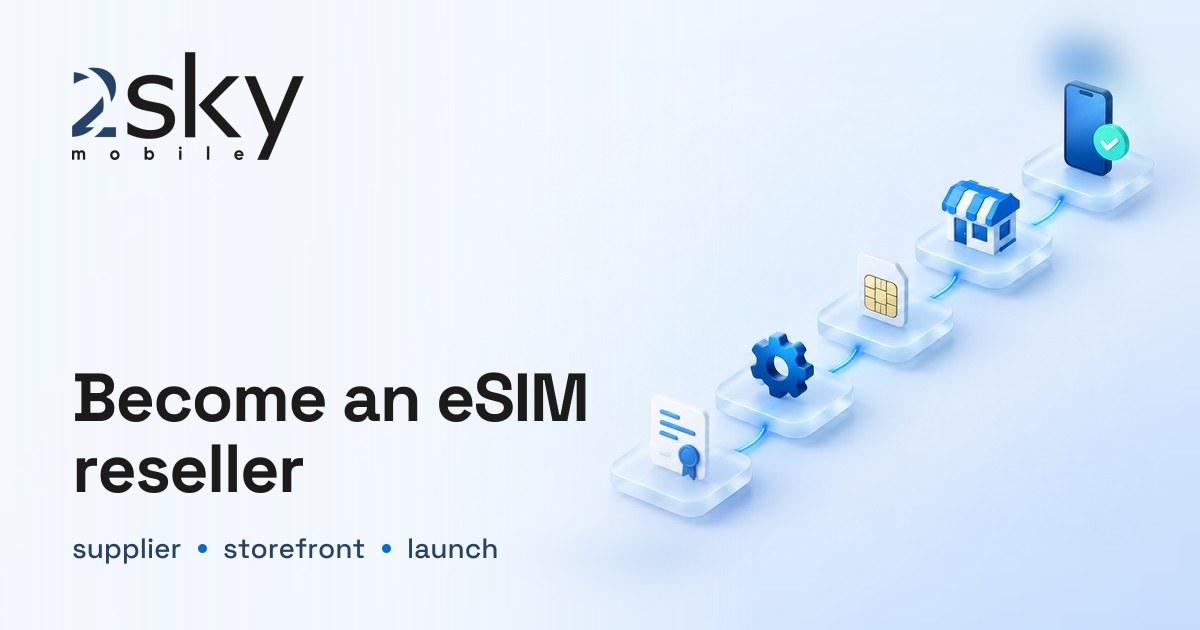
Five steps to start an eSIM business: pick a market, choose a wholesale provider, integrate, set pricing, launch and scale with analytics.
To become an eSIM reseller, make five decisions in order: choose a target market, select a wholesale provider, integrate through an API or a white-label store, set pricing and launch, then scale with analytics. This guide is for founders who want to start an eSIM business and need to know what each step commits them to. Order matters. A storefront built before the market is chosen gets rebuilt, and a price set before the provider terms are known is a guess.
Step 1: Choose a target market
Define who buys, where they use data and how you reach them. Write it as one sentence: customer, use case, destinations, sales channel.
When you already own an audience, such as a travel blog, a loyalty program or an app, choose that audience's most common trips. You skip the cost of finding buyers and can test demand directly. When you have no audience, choose a narrow niche with one reachable channel, for example business travelers on a single route, rather than "all travelers".
The trade-off is breadth. A wide market means more potential buyers, but also more destinations to source, more support questions and weaker positioning. A narrow market limits volume but makes provider selection and pricing easier. Your answer here sets the coverage you need in step 2.
Step 2: Select a wholesale provider
Your provider determines what you can sell and how you deliver it. Judge providers against your step 1 sentence, not against a generic feature list.
Check these points:
- Coverage for your target destinations, confirmed in writing rather than assumed.
- How eSIM provisioning and activation work: API, web portal or both.
- What usage and order data you receive back.
- How the connectivity is delivered through licensed network partners, and how quality issues are escalated.
- Commercial and support terms, which vary by agreement.
- Whether you can test before you commit.
A reseller does not run a network. Connectivity comes from licensed operators through your provider, so your promise to customers is only as good as those arrangements. Ask how problems are escalated before you need to.
2SkyMobile offers wholesale eSIM provisioning and activation through an API or a web portal, subject to the agreed implementation scope. Details are on the wholesale mobile data page.
Step 3: Integrate through an API or a white-label store
This step decides who builds and maintains the customer-facing side. Match the option to the team you have.
| Option | Choose it when | Trade-off |
|---|---|---|
| API integration | You have an app, checkout or platform and engineers to extend it | You build and maintain ordering, billing and support flows |
| White-label store | You need a branded storefront without building one | Less freedom over every detail than a custom build |
| Web portal | You want a provisioning route that does not require building your own integration | Availability and scope depend on the agreed implementation scope |
The White-Label eSIM Store provides a branded web storefront on your domain, optional iOS and Android apps, admin tools, payments, recurring billing and analytics. Scope is set per project, so confirm which parts you need before you plan around them. See the white-label eSIM store page.
Choose the API when eSIM sales must sit inside a product you already operate, such as a travel app. Choose the store when the storefront is not your differentiator and your brand, audience and channel are. In either case, agree the implementation scope with your provider first, because it determines the work involved.
Step 4: Set pricing and launch
Build your price from your wholesale terms, then position it against what your target customers already see. Add the costs that sit outside the wholesale rate: payment fees, refunds, support time and marketing spend. Set a price only after you know all of them.
Choose the pricing model by use case. When customers buy for a single trip, sell fixed packages by destination. When they use data regularly, such as frequent travelers or business users, recurring billing fits better, and the store supports it. The trade-off: recurring plans can raise customer lifetime value, but they need clear billing and cancellation communication.
Launch narrow. Release a small set of destinations and packages, then run real purchases end to end on real devices: checkout, eSIM delivery, installation, activation, first data use. Check that your pages state device compatibility, install steps, refund rules and terms. A narrow launch gives you clean data and limits support load while you learn what customers ask.
Step 5: Scale with analytics
Scale on evidence. Use the analytics in your store or your own reporting to answer specific questions:
- Which destinations and packages convert from visit to purchase?
- How many purchased eSIMs are installed and activated?
- Where do support requests cluster?
- Which customers buy again?
When a destination converts and customers activate, widen its package range. When purchases do not turn into activations, fix the install instructions before you buy more traffic. When repeat buyers appear, consider the optional iOS and Android apps, because an app helps most when customers return. Before that, it is one more channel to maintain. Keep reviewing provider coverage and terms as your destination list grows.
What to check before you start
Run this list before you commit budget:
- A one-sentence market definition, written down.
- Provider coverage and delivery method confirmed for those destinations.
- A clear choice of API, store or portal, with scope agreed.
- A full cost list and a chosen pricing model.
- A tested purchase-to-activation flow and published policies.
- Named metrics for your first review.
Rules on selling telecom services differ by country, so check your obligations with local advisers before launch. The eSIM reseller program page summarizes the routes side by side. If you want to compare provider and storefront options against your plan, talk to 2SkyMobile.
Key facts
- stepOrder
- The path is: choose a target market, select a wholesale provider, integrate via API or a white-label store, set pricing and launch, then scale with analytics.
- marketFirst
- The target market comes first because it defines the destination coverage you need from a wholesale provider.
- networkStatus
- Connectivity is delivered through licensed third-party operators and network partners; 2SkyMobile does not operate a network or act as an MNO or MVNO.
- whiteLabelStore
- The White-Label eSIM Store offers a branded web storefront on your domain, optional iOS and Android apps, admin tools, payments, recurring billing and analytics, scoped per project.
- integrationChoice
- Choose an API when eSIM sales must sit inside a product you already run; choose a white-label store when you need a branded storefront without building one.
- wholesaleDelivery
- 2SkyMobile provides wholesale eSIM provisioning and activation via API or web portal, subject to the agreed implementation scope.
FAQ
- How do I become an eSIM reseller?
- Follow five steps in order: choose a target market, select a wholesale provider, integrate via API or a white-label store, set pricing and launch, then scale with analytics. Each decision limits the next, so do not skip ahead.
- How do I start an eSIM business without building a platform?
- Use a white-label eSIM store that provides a branded storefront on your domain, payments, billing and admin tools. Confirm the scope per project before you plan around specific features.
- Should I integrate by API or use a white-label store?
- Choose the API when eSIM sales must live inside an app or platform you already operate and you have engineers. Choose a white-label store when your brand and audience matter more than a custom storefront.
- Do I need to be a mobile operator to resell eSIMs?
- A reseller buys connectivity from a wholesale provider, which delivers it through licensed network partners. Rules on selling telecom services differ by country, so check your obligations with local advisers.
- What should I measure after launch?
- Track conversion from visit to purchase, how many purchased eSIMs are installed and activated, where support requests cluster and which customers buy again. Use these to decide which destinations and packages to expand.